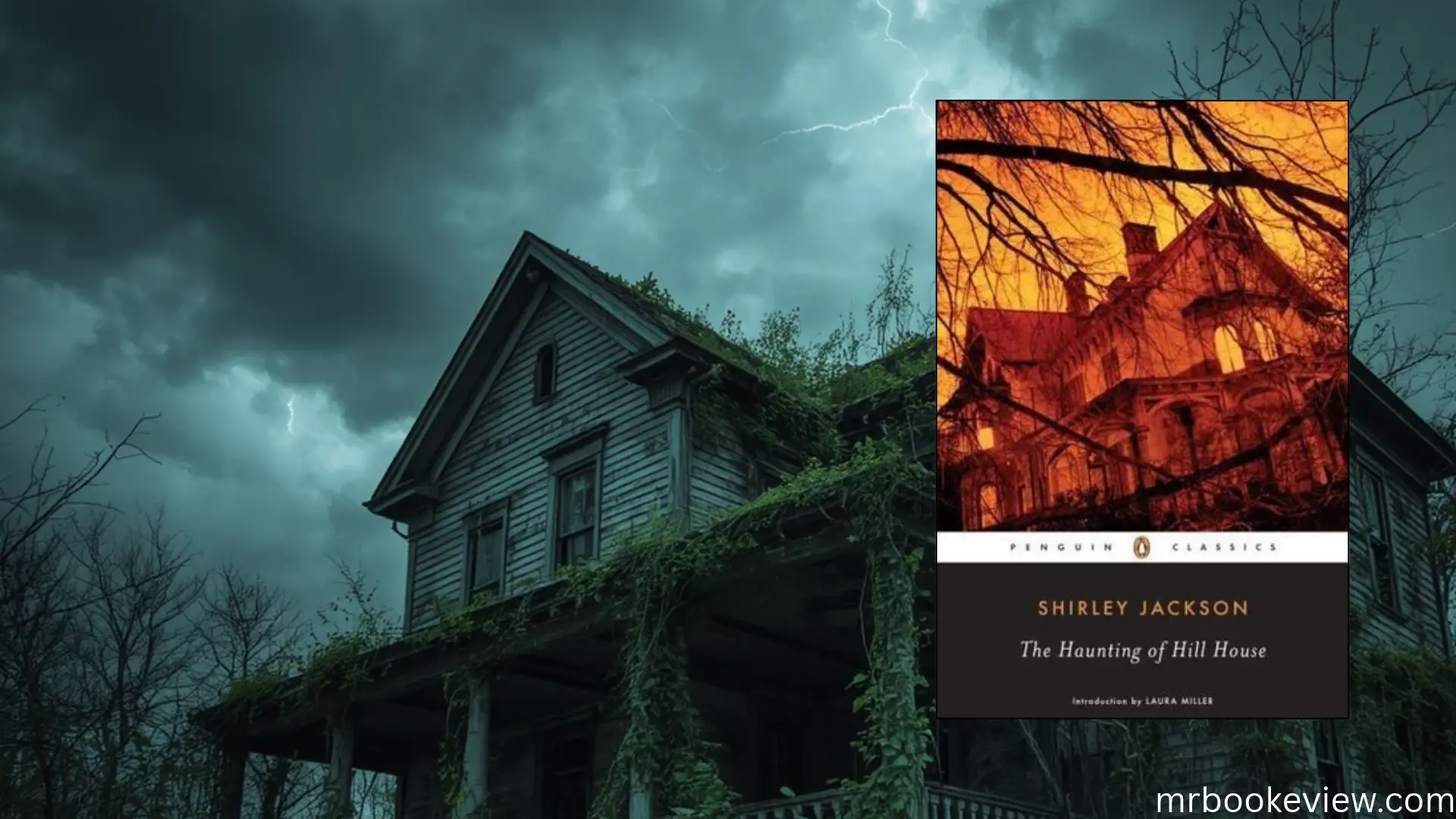
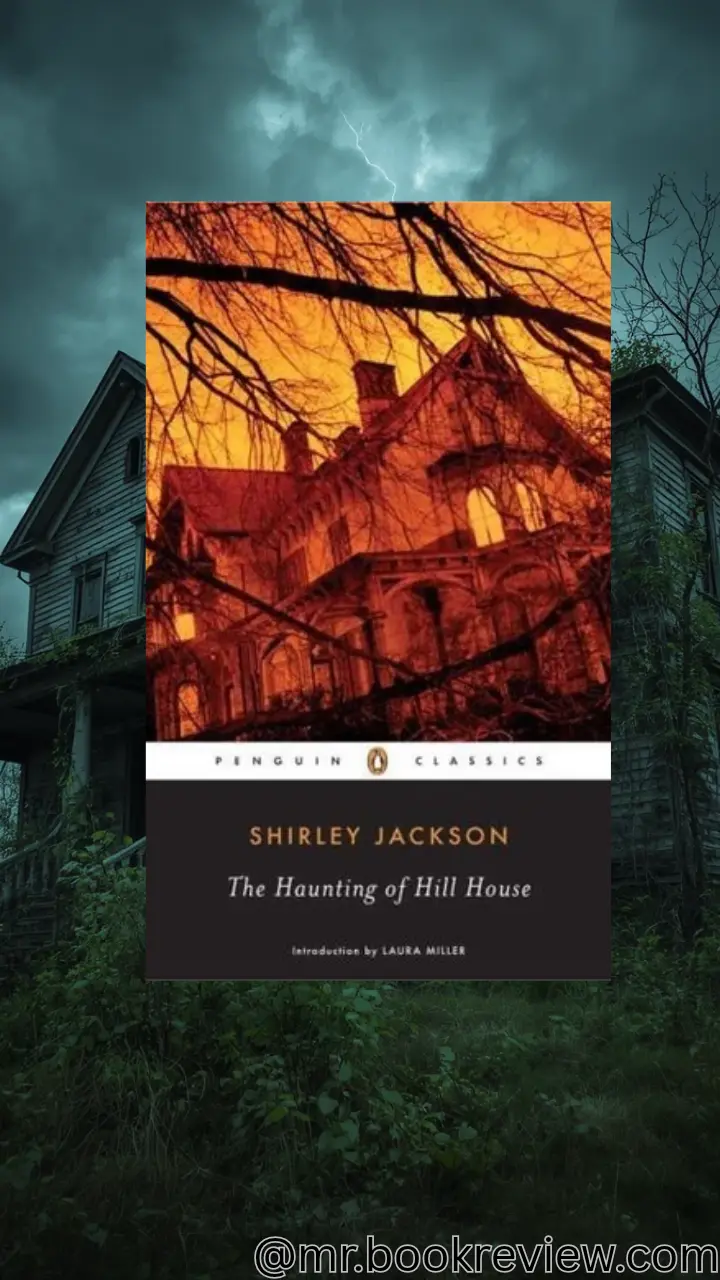
This post covers The Haunting of Hill House Book Ending Explained by Shirley Jackson. If you haven’t finished it yet, bookmark this and come back. It’s a short read.
Finished The Haunting of Hill House and sat there going, “Wait… what just happened?”
You’re not alone. The Haunting of Hill House book ending is quiet, strange, and deliberately unresolved. There’s no exorcism, no ghost in the final chapter. Just a car, a tree, and a last paragraph that makes your skin crawl. (If you came here after watching the Netflix series, the book ending is lil different. I’ve covered that further down.)
So let’s walk through it properly, but let’s have a lil detail of the book:
Best for: Slow-burn psycho-horror and gothic atmosphere
Length: Short novel
My verdict: Quiet, unsettling.
The Short Answer: Does Eleanor Die in The Haunting of Hill House?
Yes, Eleanor Vance dies at the end of the book.
After Dr. Montague insists she has to leave, Eleanor gets into her car, drives down the driveway, and steers it straight into a great tree at the curve of the drive. The book never says Eleanor died, but obviously nobody thinks that after the last scene, she walked away from it.
A Quick Recap Before We Get Into It
If it’s been a while since you read it, here’s the setup.
Dr. John Montague, a researcher of the supernatural, rents Hill House to study it. He invites a handful of people with some history of unexplained experiences. Only two accept: Theodora, Eleanor and Luke Sanderson are among the person who joins him.
Eleanor is the absolute heart of the story. She’s spent more than 10 years looking after her mother. The book also hints she carries guilt over her mother’s death, since she didn’t wake when her mother called for help one night.
She’s on Montague’s list for a reason too: when she was a child, stones rained down on her family’s house for days. Her sister and brother-in-law won’t let her take the shared car to Hill House, so she takes it anyway. It’s her first real act of rebellion, and it tells you how badly she wants a place of her own.
And Hill House notices.
Also Read: 20 Best Psychological Thriller Books
What Actually Happens in the Final Chapters
The Slow Build: How Hill House Gets Its Hooks In
The house doesn’t come out swinging. It starts small-
- doors that shut on their own
- a cold place outside the nursery
- and a booming in the hallway at night that Eleanor and Theo hear together.
Then one morning there’s a message in chalk in the hall: HELP ELEANOR COME HOME. It’s never clear who is asking for help, or whose home is meant. What is clear is that the house knows her name.
Then comes the scene that stays with most readers. In the dark, Eleanor clings to what she thinks is Theo’s hand while a child’s voice sobs in the next room. What she witnessed was unbelievable Theo is sitting up in her own bed, out of arm’s reach. Eleanor asks the question that has haunted readers ever since: whose hand was I holding? Shirley and the book never answers.
The Last Night and the Last Morning
By the final chapter, Eleanor isn’t fighting the house anymore. One night she is following what she believes is her mother’s voice, She ends up in the library and climbs a rickety iron stairway toward the turret, and Luke has to climb up and bring her down. Some readers see this as her first suic*de attempt. I think it’s the dress rehearsal for the car.
The next morning, Dr. Montague says she has to go. Eleanor begs to stay and insists she has nowhere else to go, because Hill House is the only home she has. Mrs. Montague suggests someone drive her, but the doctor says she has to cut every tie with the house right now.
Read similar books like The Haunting of hill house
The Ending Explained: That Final Drive
Eleanor pulls away and looks back at the little group watching her go. What i think is, in her mind they’ve already lost. Then she pressed the accelerator and the car end up at the great tree at the curve of the drive. The scene is chilling because she’s so calm and so proud of herself.
Then comes the moment of impact, Why am I doing this, and why doesn’t anyone stop me?
That’s the whole book in one line. Eleanor spent her life being told what to do, and in the last seconds of it she isn’t sure the choice was hers at all.
The story doesn’t end with the crash. A short epilogue tells us what happens to everyone else, Luke goes off to Paris, Theo goes back to her friend, and Dr. Montague’s article doesn’t get any attention. But at the end, the lines at the starting feels very true-
“Whatever walked there, walked alone.”
So, Is Hill House Actually Haunted?
This is the question readers argue about, and Jackson deliberately doesn’t settle it. There are three main ways to read it.
1. The house is truly haunted, and it claimed her.
This is the most straightforward reading. The supernatural events are real, the house has a will of its own, and it wanted Eleanor.
2. It’s all in Eleanor’s head.
It seems that Eleanor is isolated and maybe confused with guilt, and the house becomes the place where her instability play out.
3. It’s both, and that’s the point.
This is the one I’m most convinced by. Remember the stones that fell on Eleanor’s childhood home? Even Mrs. Montague’s planchette messages seem to be aimed at Eleanor. The house and Eleanor are a bad match made in horror heaven: a place that preys on the vulnerable, and a woman who is unbearably vulnerable. Whether the haunting started inside her or outside her barely matters by the end.
Why Eleanor Dies: What Jackson Is Really Saying
Eleanor doesn’t die because of any devil or monster. She dies because the only thing that ever made her feel wanted was a house that wanted to destroy her.
That’s why the ending hits harder than a jump scare. You spend the whole book hoping she’ll find a place to fit, and she does. It’s just the wrong place.
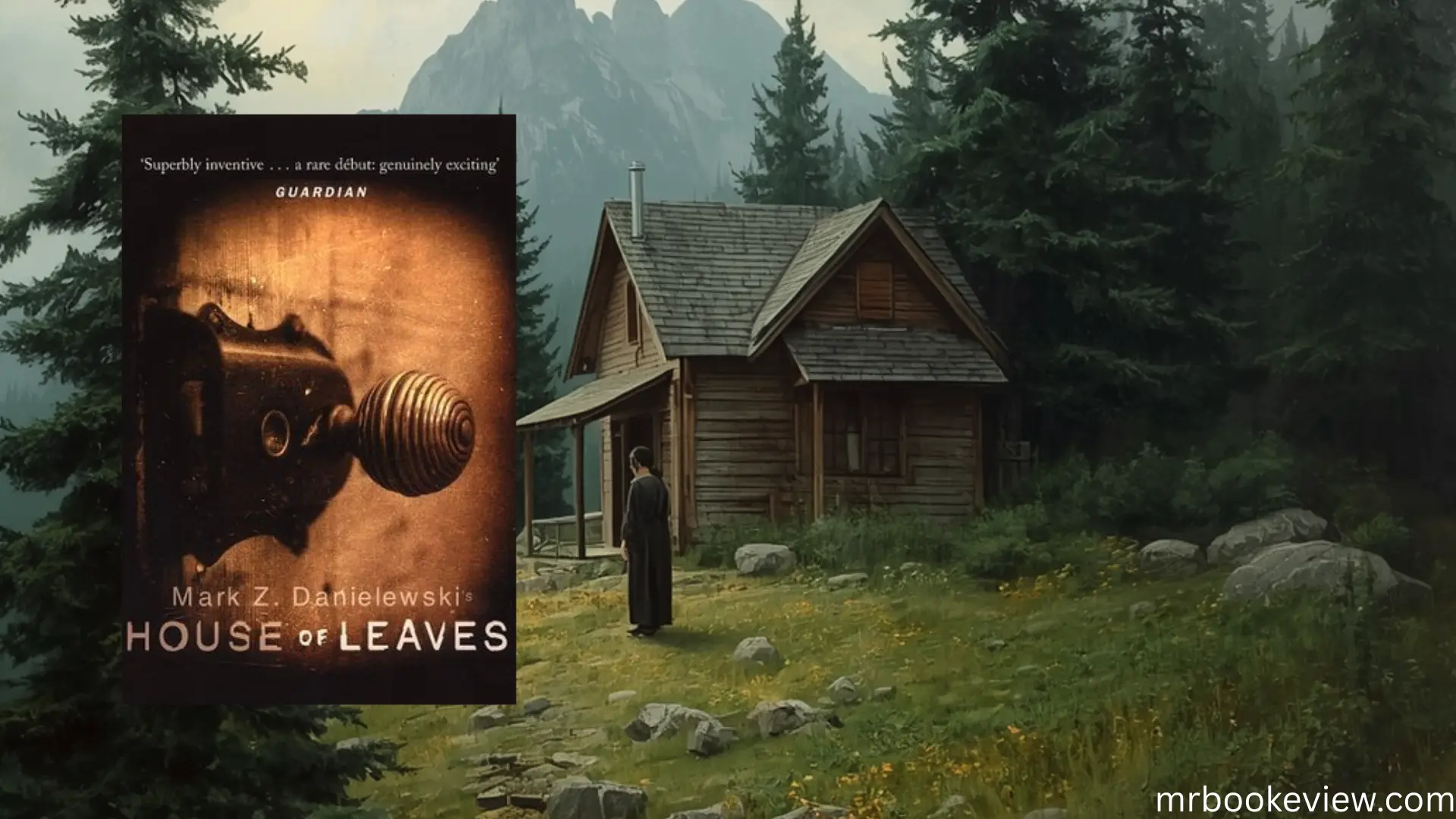
Also Read: House of Leaves, the ultimate haunted-house mindbender
Book vs. Adaptations: Does the Ending Change?
The 1963 film (The Haunting) is a relatively faithful adaptation, though some names change (you’ll see Eleanor Lance and Luke Sannerson). The 1999 remake is far looser, and critics mostly didn’t like it.
The 2018 Netflix series keeps the house and borrows a few names, but it’s a different story: the Crain family, told across two timelines. Nell dies in the series too, but not in a car crash. She dies in the house itself, and the twist is that she turns out to be the ghost called the Bent-Neck Lady.
One small link to the book: the show gives the mother the “rain of stones” backstory that Eleanor has in the novel. If you only know the show, the book’s ending will feel quieter, colder, and far more ambiguous.
My Verdict
It’s short book with great detailing. You finish it, close the cover, and keep turning it over in your head.
If you wanted a clear answer, a ghost that’s defeated or a mystery that’s solved, it may frustrate you. But if you like horror that lingers, this is one of the best endings in the genre.
And yes, it’s absolutely worth a reread once you know where it’s going.
FAQs
Does Eleanor die in the book?
Yes. She crashes her car into a tree on the way out of Hill House.
Is it suicide or did the house kill her?
Study guides usually call it suicide, but the book keeps it open. Her final thought suggests she may not have been fully in control.
Is the book scary?
It’s more unsettling than gory. If you like slow dread and atmosphere over jump scares, yes. Also if you want other scary read then you can checkout our Scariest Horror Books to Read list.